

When absence isn’t just absence – but a sign of poor wellbeing
Every year, millions of people lose their ability to work. Not because of accidents, but because they struggle with poor well-being at work. And when poor well-being isn’t detected early, it quickly shows up as increased sick leave, stress-related absences, and the loss of key employees.
Yet absence is often treated as an isolated HR metric — not the warning sign it really is.
Poor well-being is costly — both human and financial
Alone in Denmark, work-related stress costs businesses over 16 billion DKK every year in sick leave and lost productivity.
Research shows:
- Employees with high stress levels take significantly more sick days
- Stress is a major reason for resignations and the loss of key employees, costing Danish companies up to
4.8 billion DKK annually in lost productivity 61.9 millionworking hours are lost every year in Denmark due to stress-related absence
Internationally, WHO and Gallup report similar patterns:
Low well-being is linked to higher absence, lower engagement, and higher employee turnover — costing businesses and societies billions in lost work capacity and productivity.
Well‑Being Isn’t Soft! It’s a Hard Business Metric
When you merge well‑being and absence data, patterns emerge:
- Organizations with high well‑being and engagement see up to 78 % less absence
- Up to 51 % lower turnover
- Fewer mistakes and incidents
- Higher productivity and retention
WHO finds that $1 invested in mental health returns up to $4 in improved performance and lower absence. EU‑OSHA reports an average ROI of 2.5 to 4.8 times the investment for well‑being and health programs.
How Woba Helps You Turn Absence into Insight
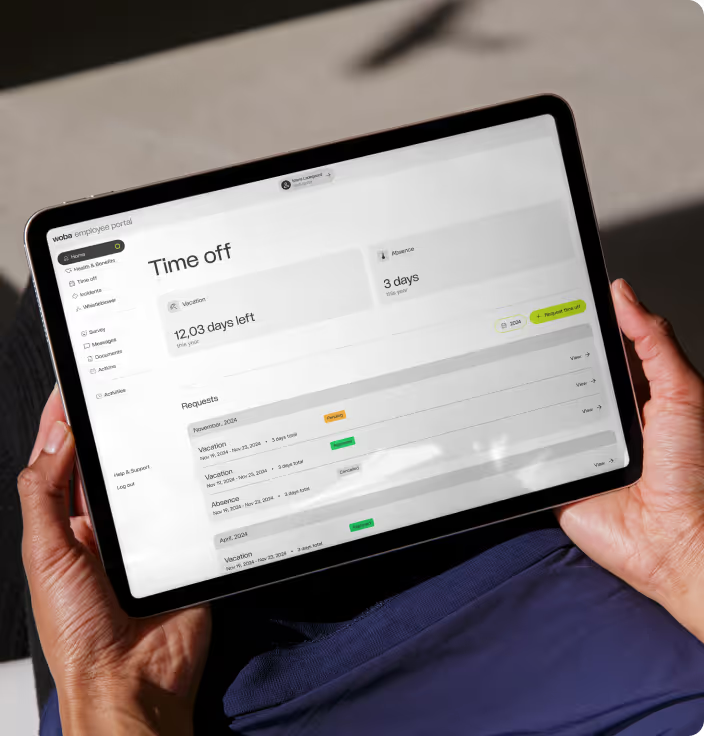
Woba brings clarity. No more spreadsheets or disconnected HR tools. With Woba, you can:
- View absence and well‑being data in a unified dashboard
- Spot early risk signals and act before stress becomes a long‑term absence
- Receive AI-based prevention suggestions
- Track ROI on well‑being measures in both engagement and financial terms
Ready to Treat Absence as a Signal, Not Just a Statistic?
See how Woba helps you reduce absence, strengthen well‑being, and keep your best employees.
Sources
- The National Research Centre for the Working Environment (NFA), 2023: Stress and Socioeconomic Impact
- WHO (2019): Mental Health in the Workplace – Return on Investment
- EU-OSHA (2022): Benefits of Occupational Health Programmes
- Gallup (2020): State of the Global Workplace and Meta-Analysis on Engagement & Performance

